

Remember when launching a DAO meant accumulating millions in your native governance token, watching the price chart rocket, and feeling like your protocol was infinitely rich? Fast forward to 2026, and that narrative looks like a relic of a simpler, more naive era. The market cycles have taught communities a brutal lesson: holding 90% of your treasury in your own unvested, highly volatile token is financial suicide.
Today, DAO treasury management has evolved from casual community spending proposals into an institutional-grade science. As protocols mature and face sophisticated macroeconomic pressures, treasury leads are no longer just asking, “How do we fund our next hackathon?” They are asking, “How do we build a multi-year balance sheet that survives a crypto winter without dumping on our community?”
The Death of Mono-Asset Treasuries
The biggest shift we are seeing across major decentralized organizations in 2026 is the aggressive diversification away from native tokens. Early models assumed that token price appreciation would solve all operational runway problems. When markets dipped, protocols suddenly found themselves insolvent overnight because their treasury value was entirely correlated with their token’s sell pressure.
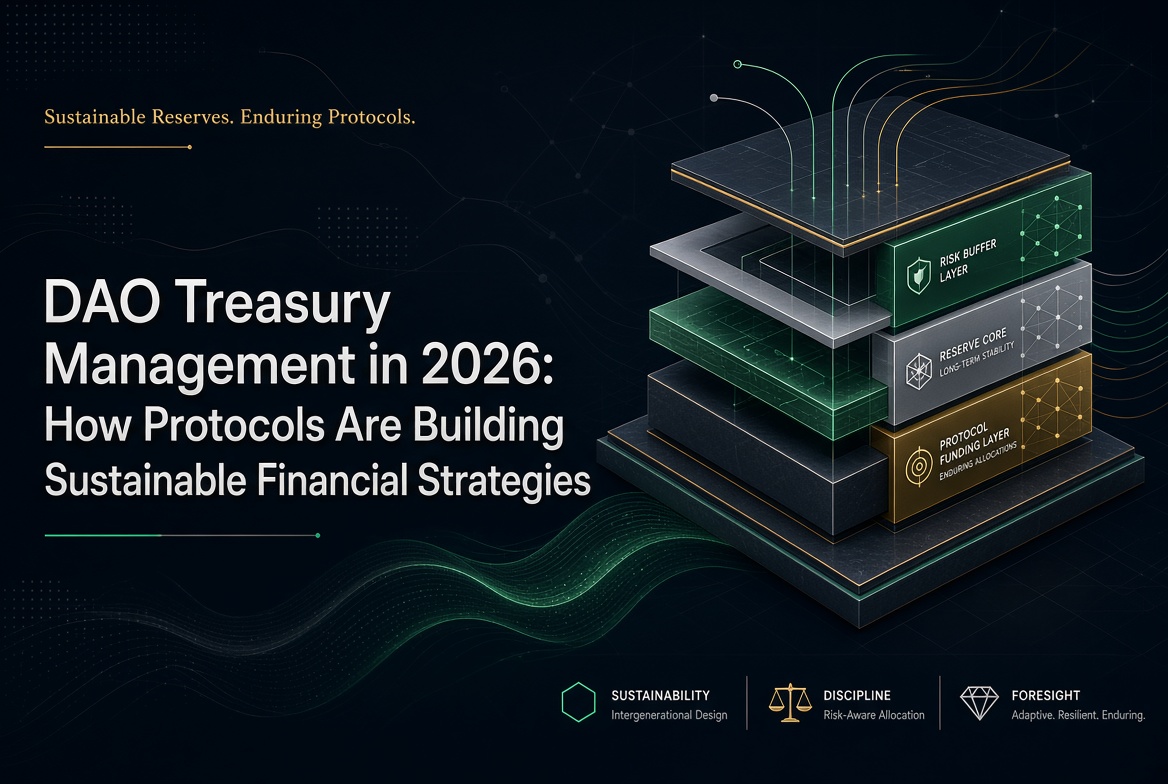
Modern protocols now enforce strict asset allocation guardrails. A healthy DAO balance sheet today typically resembles a diversified modern portfolio:
- Stablecoin Reserves: 18 to 24 months of hard runway parked in high-yield, liquid RWA (Real World Asset) protocols or short-term decentralized money markets to cover core contributor salaries.
- Blue-Chip Hedging: Meaningful allocations to hard assets like ETH or BTC to capture upside market betas without risking total collapse.
- Controlled Native Exposure: Native governance tokens are retained primarily for strategic ecosystem grants, locked liquidity incentives, or milestone-based contributor vesting.
Real-World Yield & The Rise of Automated Liquidity Management
Sitting on idle stablecoins is no longer acceptable to active governance participants. However, chasing high-yield, high-risk algorithmic farms—a mistake that bankrupted numerous DAOs in past cycles—has been entirely replaced by programmatic, risk-adjusted yield strategies.
The 2026 Reality Check: Yield generation isn’t about finding the highest APY anymore; it’s about delta-neutral execution, automated market maker (AMM) range management, and sovereign liquidity provisioning that generates protocol-owned revenue rather than mercenary capital drain.
DAOs are increasingly deploying institutional-grade tooling like automated vault rebalancers and programmatic execution committees. Instead of forcing token holders to vote on every single micro-transaction—which leads to voter apathy and sluggish response times—communities now delegate execution to specialized risk committees governed by strict programmatic parameters and multi-sig fail-safes.
The Strategy Blueprint: How Top Protocols Operate
1. Transparent Risk Frameworks
Top-tier DAOs now operate under public “Risk Charters” that dictate max drawdown limits, counterparty exposure caps, and emergency liquidation protocols before funds are ever deployed.
2. Protocol-Owned Liquidity (POL) 2.0
Moving away from inflationary liquidity mining, modern protocols leverage concentrated liquidity mechanisms to ensure trading fees flow directly back into the treasury, creating organic revenue streams.
3. Milestone-Based Contributor Streaming
Salaries and grant distributions are no longer lump-sum payouts. They are streamed block-by-block using real-time streaming tools, with automated pause switches tied to core deliverable milestones.
Looking Ahead: The Shift Toward Financial Autonomy
DAO treasury management in 2026 is defined by a return to fundamentals. The organizations thriving today are the ones that treat their treasury like an enduring financial institution rather than a decentralized slush fund. By embracing asset diversification, risk-managed yield, and automated operational efficiency, protocols are finally proving that decentralized coordination can outlast traditional corporate balance sheets.
If your DAO is still operating on vibes and a single-token balance sheet, it’s time to draft an emergency financial upgrade before the next market cycle forces your hand.
