How do I identify a “toxic” unlock event?
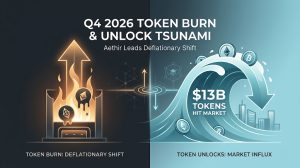
Look for the ratio between the unlock size and the average 24h trading volume. If a cliff unlock exceeds 5-10% of the circulating market cap and the project lacks deep liquidity or active buy-side demand, it often signals an imminent price correction.
Is high FDV always a red flag?
Not always, but it is a valuation ceiling. Compare the FDV to the project’s actual protocol revenue. If the P/S (Price-to-Sales) ratio at FDV is exponentially higher than industry peers, the token is likely overvalued and reliant on future hype rather than fundamentals.
How do I distinguish between “Real Yield” and inflationary bait?
Always audit the source of the yield. If the staking APY is paid in the protocol’s own native token without a corresponding revenue burn or fee-sharing model, it is simple inflation, not “yield.” Real yield comes from protocol fees distributed to stakers.
What is the “Value Capture” litmus test?
Ask: “If the protocol succeeds, does the token holder benefit?” A strong model forces the token to be essential for governance rights, revenue sharing, or as a deflationary asset (e.g., fee burns). If the token is only used for inflation-based incentives, it fails the litmus test.
How should I adjust my portfolio for high supply inflation?
For tokens with heavy emissions, you must account for “dilution tax.” Your position size effectively shrinks over time unless your holding grows at a rate matching the inflation. We suggest treating these as short-term momentum plays rather than long-term “HODL” assets.
Where to find reliable unlock data?
Reliable data should come directly from protocol documentation, vesting smart contracts, or specialized transparency dashboards. Avoid blindly trusting “market cap” sites, as they often fail to distinguish between fully vested supply and team/VC locked supply.